

Color in contemporary interiors no longer depends solely on painted walls. Instead, designers increasingly shape color through materials, allowing stone, timber, textiles, and finishes to define tone, warmth, and depth. Rather than applying pigment, they create atmosphere through texture, grain, surface, and light.
For over three decades, R.K. Malik & Associates, founded in 1987, has followed this material-led philosophy. Across projects, the studio foregrounds honest material expression and natural beauty as the foundation of its architectural language. The team does not impose color artificially; it allows color to emerge through moderation, craftsmanship, and contextual sensitivity.
Katyal Residence: Texture as Spatial Narrative
At the 5,748 SqFt Katyal Residence, texture leads the narrative. The double-height living area introduces a layered palette where patterned stone flooring establishes gentle movement, while textured wall panels add depth without overt hues. Here, color through materials becomes evident as tonal variations in stone define spatial rhythm and visual continuity.
Light strengthens this dialogue. As daylight shifts, surfaces respond dynamically. A sculptural chandelier and bespoke furnishings enhance the interplay between illumination and texture, ensuring that color never feels static. It brightens in the morning, softens toward evening, and remains grounded in natural undertones throughout the day.


Stone and Timber as Expressions of Color Through Materials
Wood shapes the home’s emotional warmth. The timber deck along the indoor pool courtyard creates a tranquil, resort-like setting. Its earthy grain, paired with a carved jaali wall and diffused lighting, fosters intimacy and calm. In this context, timber does more than add contrast—it reinforces color through materials by embedding warmth directly into the architecture.
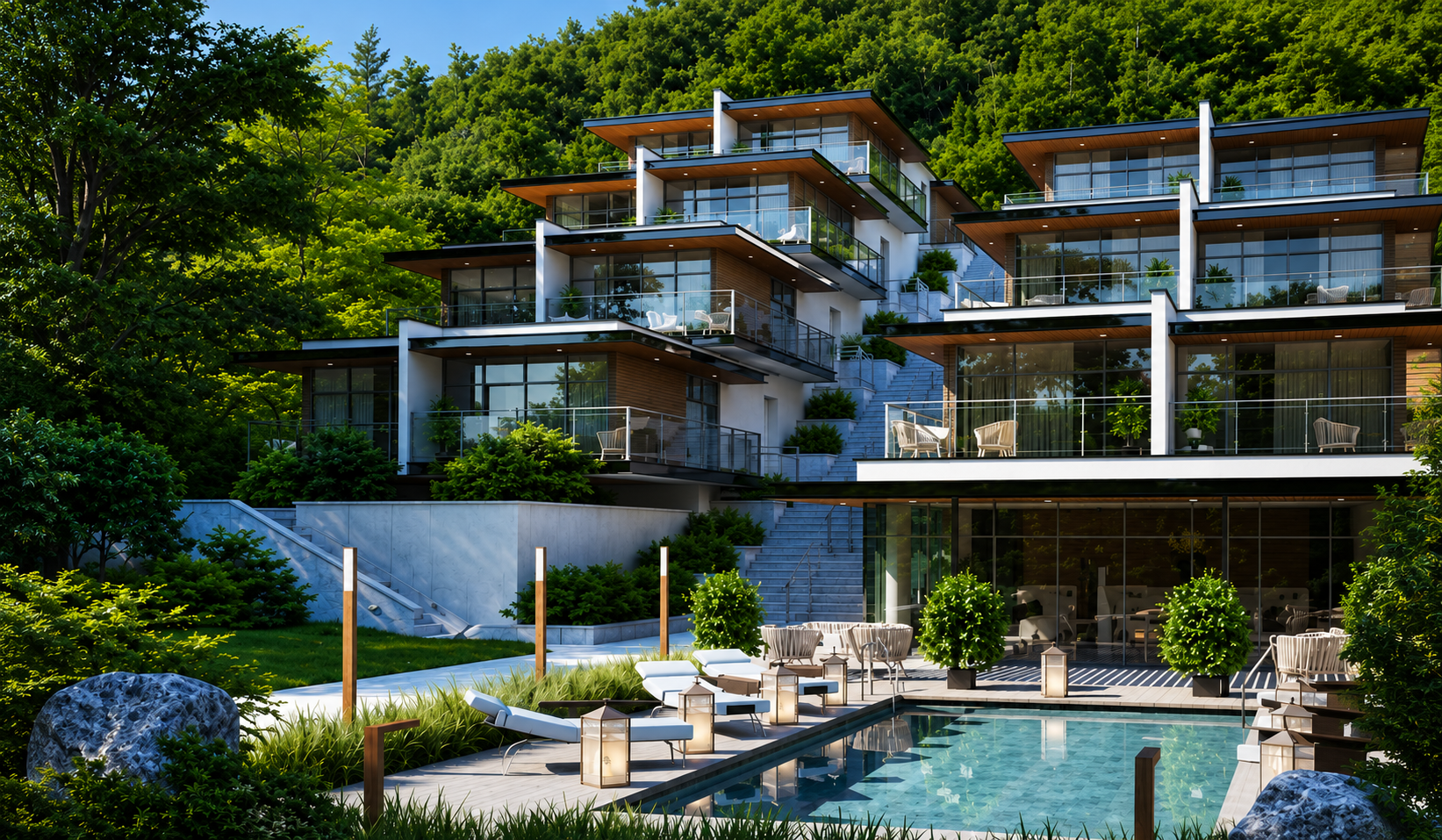
The Timber Tile Residence extends this philosophy from the outset. The façade features staggered planes of stone and timber, establishing earthy undertones and visual rhythm without relying on paint. Stone anchors the structure with permanence, while timber introduces softness. Together, they demonstrate how color through materials can respond to climate, light, and proportion with quiet confidence.


Integrating Landscape and Interior Restraint
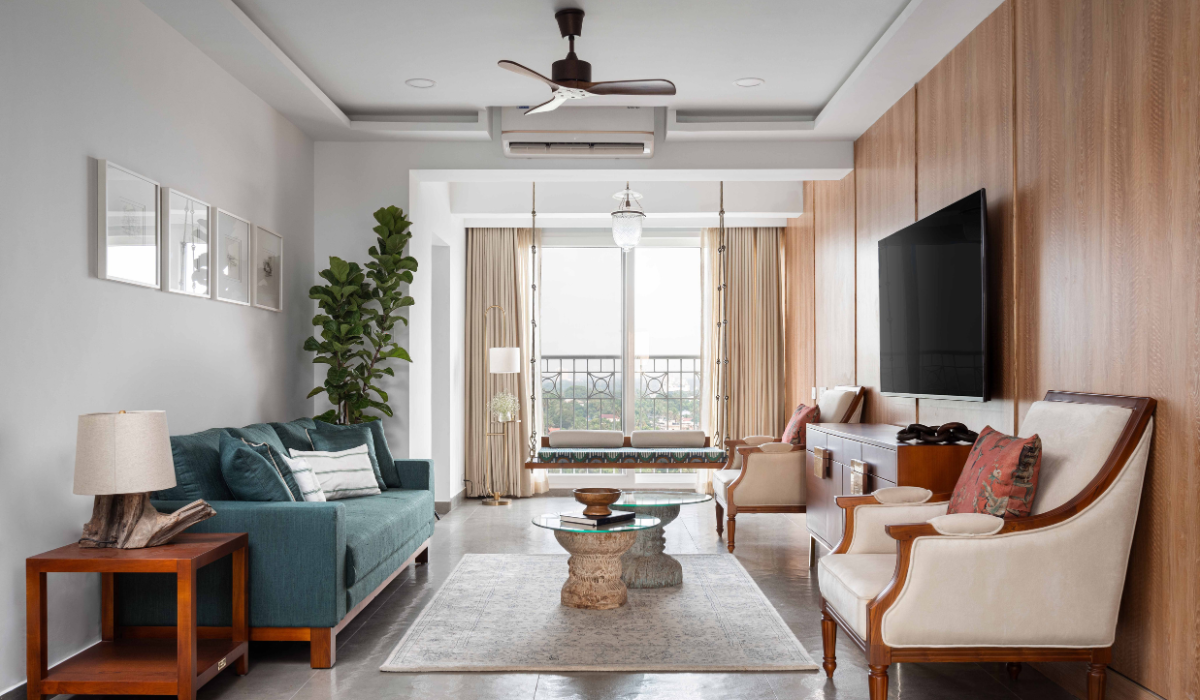
Landscape integration further softens the built form and extends spatial depth, allowing architecture and nature to read as a cohesive whole. Inside, restraint continues. A muted base palette allows art, furniture, and natural light to assume prominence. Sheer drapery filters daylight, reflective surfaces enhance luminosity, and controlled lighting guides transitions from vibrant mornings to intimate evenings.
Private spaces deepen the exploration. Patterned ceilings and textured wall treatments introduce tonal variation through craftsmanship rather than pigment. Furniture selections emphasise longevity and comfort, reinforcing understated luxury shaped by authenticity.

Beyond Pigment: A New Definition of Color
Heritage Haus approaches the idea of color through contrast and classical nuance. Inspired by European mansions, the residence balances contemporary clarity with ornate mouldings under the theme Modern Elegance with Classical Refinement. The façade combines soothing mint stone with brown stone accents, achieving depth through material contrast instead of applied color. Shadow and proportion generate richness while maintaining composure.
Indoors, mouldings and refined finishes create subtle tonal shifts. Consistent material use guides transitions across open and traditionally zoned spaces. Here, color emerges from stone, polish, and grain. Craftsmanship rooted in tradition adapts seamlessly to contemporary living, ensuring durability alongside elegance.

Across these residences, a consistent philosophy emerges. Color does not rely solely on pigment. Stone offers grounded undertones and permanence. Timber carries warmth through grain and patina. Textiles soften light and introduce tactility. Finishes—whether matte, polished, carved, or patterned—shape how surfaces interact with illumination.
By privileging natural materials, calibrated lighting, and refined detailing, the studio demonstrates that color can function as a sensory condition rather than a surface treatment. Ultimately, the most compelling palettes are not painted on; designers embed color through materials into the very fabric of the home

Also Read:
Hospitality Design in the Age of Experience
House Neeranjanam, Bengaluru | Architecture + Swath
7 Refined Soft Furnishings Elevating Cozy Home Interiors

Biltrax Construction Data is tracking 38,000+ projects on their technology platform for their clients.
Get exclusive access to upcoming projects in India with actionable insights. Furthermore, gain a competitive advantage for your products in the Indian Construction Market.
Visit www.biltrax.com or email us at contact@biltrax.com to become a subscriber and generate leads.
Disclaimer: The information herein is based upon information obtained in good faith from sources believed to be reliable. All such information and opinions can be subject to change. Furthermore, The image featured in this article is for representation purposes only. It does not in any way represent the project. If you wish to remove or edit the article, please email editor@biltrax.com.
 0
0Discover more from Biltrax Media, A Biltrax Group venture
Subscribe to get the latest posts sent to your email.