

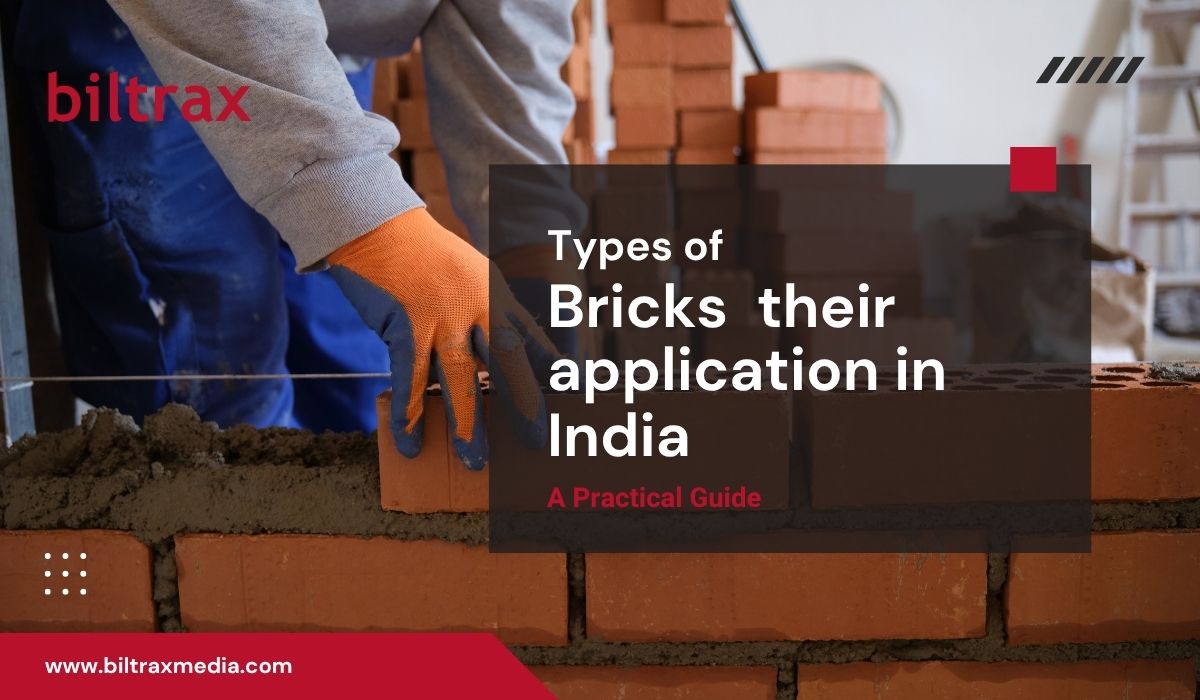
India’s construction sector has evolved rapidly over the last decade. High-rise residential towers, industrial corridors, smart cities, logistics parks, and green buildings are reshaping the country’s urban and rural landscape. Yet amid this transformation, one building material continues to remain fundamental to Indian construction — the brick.
From traditional clay masonry in small towns to precision-engineered blocks in urban developments, bricks continue to define the structural strength, thermal performance, cost efficiency, and sustainability of buildings across India. However, the growing variety of masonry units available today has also made material selection more complex for developers, architects, contractors, and homeowners.
Choosing the right type of brick is no longer only about availability or cost. Factors such as compressive strength, water absorption, insulation performance, sustainability, speed of construction, and project typology now influence material decisions across the construction value chain.
This article explores the major types of bricks used in India, their properties, applications, advantages, and limitations, while also examining how evolving construction practices are changing the role of masonry materials in modern infrastructure.
The Role of Bricks in Indian Construction
Bricks have been used in the Indian subcontinent for thousands of years, dating back to the Indus Valley Civilisation. Despite the emergence of steel, concrete, and prefabricated technologies, masonry construction remains widely preferred due to its affordability, ease of installation, thermal comfort, and availability across regions.
In India, bricks are commonly used for:
- Residential housing
- Boundary walls
- Commercial buildings
- Industrial facilities
- Institutional projects
- Internal partition walls
- Landscaping and paving applications
The performance of a building often depends significantly on the quality and suitability of the brick selected for the project.
Understanding Bricks
A brick is a rectangular masonry unit manufactured using clay, fly ash, concrete, lime, or similar materials. These units are bonded together using mortar to create walls, partitions, facades, and structural systems.
The standard modular brick size in India is typically:
- 190 mm × 90 mm × 90 mm
However, dimensions may vary depending on manufacturer specifications, regional practices, and project requirements.
The ideal brick should possess:
- High compressive strength
- Low water absorption
- Dimensional accuracy
- Thermal insulation properties
- Fire resistance
- Durability against weathering
As construction technology advances, the Indian market now offers multiple brick variants tailored for different climatic, structural, and sustainability requirements.
Major Types of Bricks Used in India
1. Burnt Clay Bricks
The Traditional Backbone of Indian Construction


Burnt clay bricks remain the most commonly used masonry material in India. Manufactured by moulding clay and firing it in kilns at high temperatures, these bricks are known for their durability and structural reliability.
Key Characteristics
- High compressive strength
- Good fire resistance
- Durable and long-lasting
- Widely available across India
- Suitable for load-bearing structures
Applications
Burnt clay bricks are extensively used in:
- Residential housing projects
- Compound walls
- Low-rise commercial buildings
- Foundations and load-bearing walls
- Rural and semi-urban construction
Limitations
Despite their widespread usage, burnt clay bricks have certain drawbacks:
- Higher water absorption
- Irregular dimensions in low-quality production
- Environmental impact due to topsoil extraction and kiln emissions
- Increased mortar consumption due to uneven surfaces
2. Fly Ash Bricks
The Sustainable Alternative
Fly ash bricks have emerged as one of the fastest-growing masonry materials in India. Manufactured using fly ash, cement, sand, and water, these bricks support sustainable construction practices while offering improved dimensional accuracy.


The increasing adoption of fly ash bricks also aligns with India’s push toward waste utilisation and environmentally responsible construction materials.
Key Characteristics
- Lightweight construction
- Uniform shape and size
- Reduced water absorption
- Smooth surface finish
- Lower mortar requirement
- Better thermal insulation compared to conventional clay bricks
Applications
Fly ash bricks are commonly used in:
- High-rise residential towers
- Commercial developments
- Affordable housing projects
- Institutional buildings
- Internal and external wall systems
Advantages in Urban Construction
Developers increasingly prefer fly ash bricks because they:
- Reduce structural dead load
- Improve construction speed
- Lower plastering costs
- Enhance finish quality
- Support green building certifications
Limitations
- Lower suitability in areas with inconsistent manufacturing quality
- Requires controlled curing during production
- Transportation costs may rise in regions far from thermal power plants
3. AAC Blocks (Autoclaved Aerated Concrete Blocks)
Lightweight Construction for Modern Infrastructure
Although technically blocks rather than traditional bricks, AAC blocks have become highly prominent in India’s urban construction ecosystem.
Manufactured using cement, lime, fly ash, aluminium powder, and water, AAC blocks are cured in autoclaves under high pressure and temperature.


Key Characteristics
- Extremely lightweight
- High thermal insulation
- Excellent sound insulation
- Fire-resistant properties
- Faster construction due to larger block sizes
Applications
AAC blocks are widely used in:
- High-rise buildings
- IT parks
- Hospitals
- Hotels
- Commercial complexes
- Green buildings
Industry Shift Toward AAC
Urban developers increasingly adopt AAC blocks due to:
- Faster project execution
- Lower structural steel consumption
- Energy efficiency benefits
- Reduced labour dependency
- Better seismic performance
Limitations
- Brittle compared to conventional bricks
- Requires specialised installation techniques
- Higher initial material cost in certain regions
4. Concrete Bricks
Strength and Durability for Heavy-Duty Applications
Concrete bricks are manufactured using cement, sand, aggregates, and water. They are known for their structural strength and resistance to weathering.


Key Characteristics
- High compressive strength
- Excellent durability
- Weather resistance
- Good sound insulation
- Available in multiple finishes and textures
Applications
Concrete bricks are commonly used in:
- Industrial projects
- Warehouses
- Paving applications
- Facade systems
- Retaining walls
- Landscaping projects
Limitations
- Heavier than AAC and fly ash bricks
- Lower thermal insulation
- Higher transportation costs
5. Sand Lime Bricks (Calcium Silicate Bricks)
Precision and Finish-Oriented Masonry
Sand lime bricks are manufactured using sand, lime, and pigments under high pressure.
These bricks are gaining attention in projects requiring superior finish quality and dimensional precision.


Key Characteristics
- Smooth surface texture
- Uniform dimensions
- Good acoustic insulation
- Strong load-bearing capacity
- Enhanced fire resistance
Applications
They are used in:
- Decorative facades
- Architectural masonry
- Institutional buildings
- Premium residential projects
Limitations
- Limited regional availability
- Higher production costs compared to clay bricks
6. Engineering Bricks
High-Performance Masonry for Structural Applications
Engineering bricks are specially manufactured for applications requiring high strength and low water absorption.


Key Characteristics
- Exceptional compressive strength
- High density
- Water and chemical resistance
- Superior durability
Applications
Engineering bricks are suitable for:
- Basements
- Sewage systems
- Retaining structures
- Industrial foundations
- Water-retaining structures
Limitations
- Expensive compared to standard bricks
- Primarily used in specialised applications
7. Sun-Dried Bricks
Traditional Masonry in Rural Construction
Sun-dried bricks are among the oldest forms of masonry units used in India. These bricks are manufactured by drying clay naturally under sunlight without kiln firing.

Key Characteristics
- Low manufacturing cost
- Minimal energy consumption
- Locally available materials
- Suitable for temporary structures
Applications
They are generally used in:
- Rural housing
- Temporary shelters
- Agricultural structures
- Low-cost construction
Limitations
- Poor water resistance
- Low compressive strength
- Shorter lifespan
- Unsuitable for heavy rainfall regions
Classification of Bricks Based on Quality
Bricks in India are also categorised according to manufacturing quality and structural suitability.
First-Class Bricks
These are premium-quality bricks with:
- Uniform dimensions
- Smooth edges
- High strength
- Low water absorption
Used in exposed masonry and important structural work.
Second-Class Bricks
These bricks possess slight irregularities and are used where plastering is required.
Applications include:
- Internal walls
- General masonry work
Third-Class Bricks
These are lower-quality bricks with higher water absorption and reduced strength.
Used mainly in:
- Temporary structures
- Non-load-bearing walls
Fourth-Class Bricks
Overburnt and brittle in nature, these bricks are unsuitable for construction but can be crushed for:
- Road sub-base material
- Aggregate filling
Applications of Bricks Across Construction Segments
Different construction projects require different masonry solutions.
| Brick Type | Primary Applications |
| Burnt Clay Bricks | Residential and low-rise buildings |
| Fly Ash Bricks | High-rise and sustainable developments |
| AAC Blocks | Commercial towers and green buildings |
| Concrete Bricks | Industrial and paving applications |
| Engineering Bricks | Basements and water-retaining structures |
| Sand Lime Bricks | Premium architectural projects |
| Sun-Dried Bricks | Rural and temporary construction |
Key Factors to Consider While Selecting Bricks
1. Compressive Strength
Structural walls require bricks capable of handling high loads without cracking.
2. Water Absorption
Lower water absorption improves durability and reduces seepage issues.
As per Indian standards, good-quality bricks should not absorb more than 20% of their dry weight in water.
3. Thermal Insulation
Thermally efficient bricks help reduce indoor heat gain and improve energy performance.
This has also become increasingly important in India’s hot climatic zones.
4. Dimensional Accuracy
Uniform brick sizes improve:
- Masonry alignment
- Construction speed
- Finish quality
- Mortar efficiency
5. Sustainability
With the construction industry focusing more on environmental responsibility, materials such as fly ash bricks and AAC blocks are becoming increasingly preferred.
How to Identify Good Quality Bricks
High-quality bricks typically exhibit the following characteristics:
- Uniform colour and shape
- Sharp edges
- Dense structure
- Clear ringing sound when struck
- Minimal breakage
- Low efflorescence
Field testing methods often include:
- Drop tests
- Water absorption tests
- Soundness tests
- Hardness tests
The Future of Brick Construction in India
India’s masonry industry is undergoing a major transition.
Traditional clay bricks continue to dominate regional and low-cost construction markets. However, urbanisation, labour shortages, sustainability mandates, and faster project timelines are accelerating the shift toward alternative masonry solutions such as fly ash bricks and AAC blocks.
Government policies promoting:
- Fly ash utilisation
- Energy-efficient construction
- Green building certifications
- Sustainable urban infrastructure
are expected to further reshape the brick manufacturing landscape over the coming years.
Additionally, developers are increasingly prioritising materials that reduce structural load, improve thermal performance, and accelerate project completion timelines.
Conclusion
Bricks remain one of the most essential components of India’s construction ecosystem. However, the definition of the “ideal brick” has evolved significantly with changing construction demands.
While burnt clay bricks continue to provide familiarity and proven durability, newer alternatives such as fly ash bricks and AAC blocks are redefining efficiency, sustainability, and performance in modern construction.
Selecting the right masonry material depends on multiple project-specific factors, including structural requirements, climate conditions, cost considerations, sustainability goals, and construction timelines.
As India’s built environment continues to expand across residential, commercial, industrial, and infrastructure sectors, the future of masonry will also increasingly balance traditional strength with modern performance-driven innovation.
Also Read:
Union Budget 2026-27: Impact on India’s Construction Sector
Types of Construction Materials Used in India: A Practical Guide
What Are Construction Materials? A Complete Breakdown for Today’s Industry

Biltrax Construction Data is tracking 38,000+ projects on their technology platform for their clients.
Get exclusive access to upcoming projects in India with actionable insights. Gain a further competitive advantage for your products in the Indian Construction Market.
Visit www.biltrax.com or email us at contact@biltrax.com to become a subscriber and generate leads.
Disclaimer: The information herein is based upon information obtained in good faith from sources believed to be reliable. All such information and opinions can be subject to change. Furthermore, the image featured in this article is for representation purposes only. It does not in any way represent the project. If you wish to remove or edit the article, please email editor@biltrax.com.
 0
0Discover more from Biltrax Media, A Biltrax Group venture
Subscribe to get the latest posts sent to your email.