

Osaka, designed by FellowYellow, draws inspiration from the Japanese philosophy of nagare, which means flow or current. The project occupies a narrow and linear building previously used as a bakery in Hyderabad. At first glance, the proportions seemed difficult to adapt. However, Geethu and Sreyas, Co-founders of FellowYellow, saw potential in the 6000 SqFt structure. They interpreted its constraints through the concept of flow and transformed it into the defining feature of the restaurant.
This guiding idea shapes every aspect of the design. It influences how visitors move through the space, how light interacts with surfaces, and how the atmosphere gradually shifts from day to night.
Osaka and Its Site Context
Set amidst lush greenery on the city’s edge, the restaurant responds strongly to its surroundings. The natural setting strengthens the idea of flow and connection with the outdoors. Consequently, the design blurs the boundary between indoor and outdoor spaces. The restaurant introduces a refreshing alfresco dining experience. Simultaneously, it transitions smoothly from daytime dining to an atmospheric evening bar. This approach supports efficient service while maintaining a refined and modern identity, free from predictable Pan-Asian design tropes.
Light and movement act as the primary tools of transformation in the project. FellowYellow introduced minimal yet effective architectural interventions to allow nature to flow into the space. They opened existing walls, expanded windows, and inserted a skylight above the staircase. In addition, they lifted the entrance to a double-height volume to create a strong sense of arrival.
At the entrance, guests encounter a live counter. Here, the aroma of fresh ingredients and the visual energy of food preparation set the tone for the experience. From this point, visitors move naturally toward the dining spaces. Inside, a kinetic koi installation and an indoor Zen Garden anchor the interiors. These elements guide attention away from the rigid building form. Instead, they create an atmosphere defined by openness, breath, and connection.


Spatial Organization Across Three Levels
The restaurant unfolds across three levels, each with a distinct spatial character. The ground floor combines natural elements with a calm Japanese sensibility. In the waiting area, koi fish sculptures float beneath a rippling mirror ceiling. Nearby, a jali screen connects the main dining space to a Zen Garden beyond.
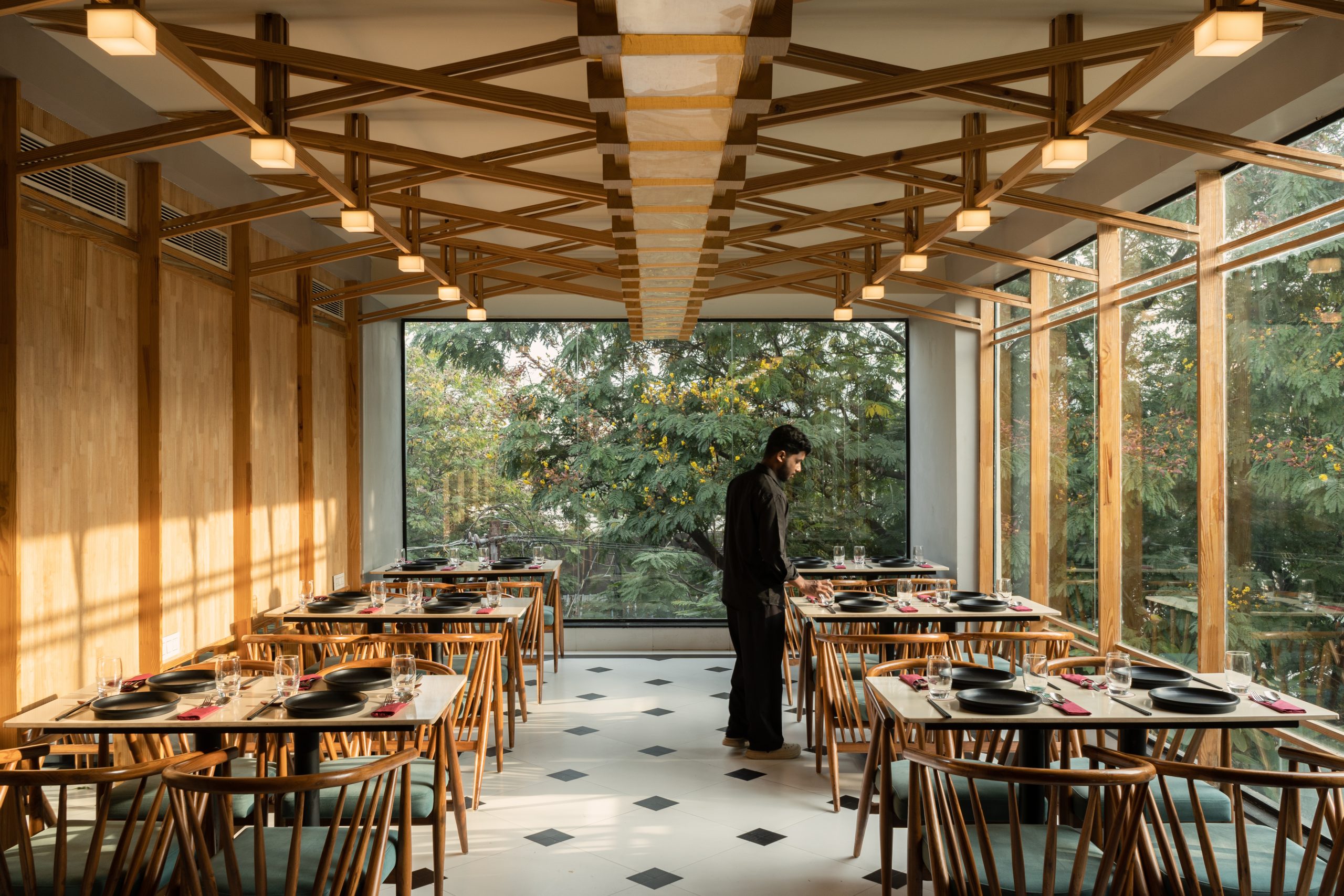
The first floor introduces a slower and more nostalgic atmosphere. A private dining room references zashiki seating with built-in benches and Asian motifs. Meanwhile, a glasshouse-like volume expands the dining experience. Crisscross timber battens and soft, even lighting create a calm and balanced environment.
Finally, the staircase leads visitors to the terrace floor. Here, rigid wooden lines gradually give way to softer spatial expressions. Flowing white drapes, a long counter, and open-to-sky seating areas invite the city breeze and create a relaxed dining setting.


Also Read: Reddy House, Hyderabad | Mita Mehta Studio
Material Language and Craft Inspiration at Osaka
Material choices reinforce the design narrative. The project draws inspiration from kigumi, the traditional Japanese craft of wood joinery. Timber grids extend across ceilings, stairwell partitions, and custom lighting installations. Concealed joints and warm textures establish a sense of precision and restraint. Meanwhile, a sculptural floor lamp, refined through several on-site mock-ups, continues this craft language. The curved roof introduces another layer of material expression. Designers finished it with grey FRP tiles that echo traditional kawara clay roofing. Corbelled structural details support the roof while ensuring durability for a high-traffic restaurant environment.
Intentional details throughout the restaurant connect functionality with symbolism. Deep red koi elements create a visual link between the two dining levels and introduce a sense of movement. The Zen Garden also serves a functional role. It screens the kitchen’s service entry while framing the guest’s view. At the same time, the interior palette maintains a calm and cohesive character. Designers used earthy tones of beige, timber, greys, and whites. Subtle blues and dark wood furniture provide gentle contrast.
Together, these elements create an environment that feels balanced, timeless, and free from cliché.


Also Read: Corium Introduces 2026 Italian Seating Trends to Indian Homes

Biltrax Construction Data is tracking 38,000+ projects on their technology platform for their clients.
Get exclusive access to upcoming projects in India with actionable insights. Gain a further competitive advantage for your products in the Indian Construction Market.
Visit www.biltrax.com or email us at contact@biltrax.com to become a subscriber and generate leads.
Disclaimer: The information herein is based upon information obtained in good faith from sources believed to be reliable. All such information and opinions can be subject to change. Furthermore, the image featured in this article is for representation purposes only. It does not in any way represent the project. However, If you wish to remove or edit the article, please email editor@biltrax.com.
 0
0Discover more from Biltrax Media, A Biltrax Group venture
Subscribe to get the latest posts sent to your email.