

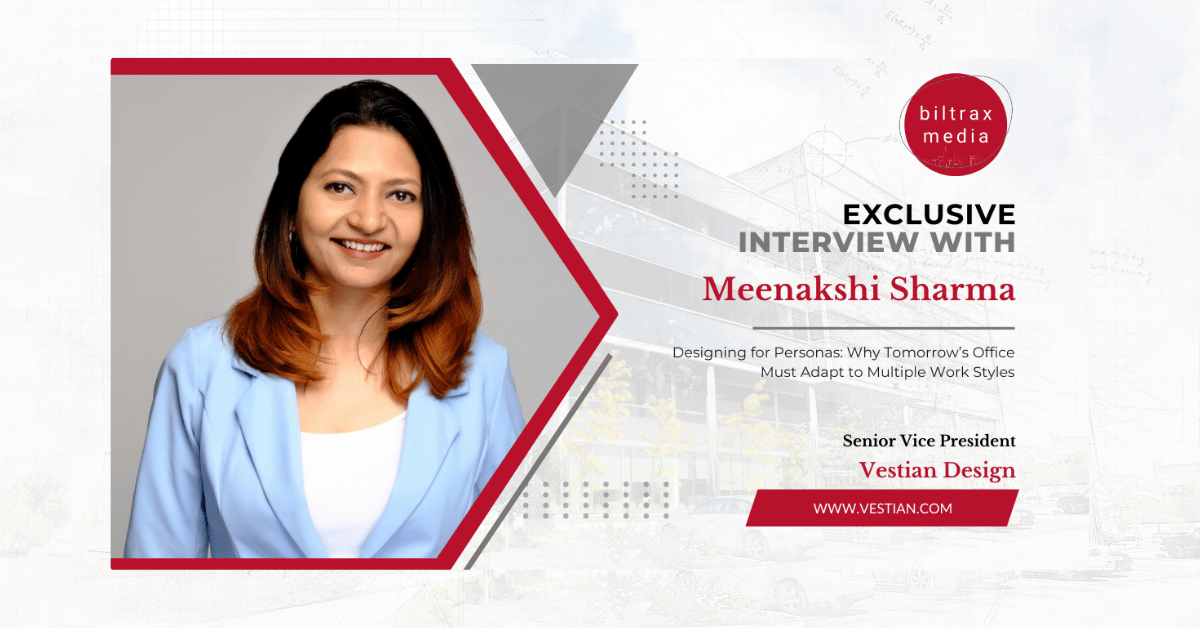
Hybrid work didn’t kill the office; it simply exposed how out of sync many were with the way people actually work. A truly inclusive workplace can be designed by mapping employees along two sliding scales: how much social interaction they seek and how much sensory input they require to stay productive. This dual-axis lens reframes the office as an ecosystem of settings rather than a single dominant layout.
From axes to archetypes
Once those scales are in view, five headline personas emerge. Extroverts gravitate to energetic hubs—think café-style corners, visible amenities, and furniture that can be re-stacked for impromptu huddles. Introverts, by contrast, refuel in low-stimulus nooks, buffered by plant walls or acoustic screens that cut visual and auditory clutter. Ambiverts live between these poles and need easy access to both lively corners and quiet booths. Hyper-focused contributors (often neurodivergent) thrive in distraction-free pods with muted finishes, while high-stimuli workers draw energy from bold branding, sensory variety, and amenity-rich “club” zones that coax them back to the office.
The crucial insight is that no one stays parked in a single persona all day; people shift along the scales as tasks, energy levels, and moods change. Variety, not categorisation, is the true metric of inclusivity.

Why acoustics still top the grievance list
Noise is where many offices stumble. Leesman’s recent Power of Place analysis found that only about 32 % of employees are satisfied with noise levels, making it one of the two lowest-rated workplace features. For introverts and hyper-focused workers, poor acoustics aren’t a mild annoyance—they’re a productivity tax. The design takeaway is to treat sound like light: layer it, shield it, and let workers modulate their own acoustic micro-climate.
Choice is a performance lever, not a perk
Gensler’s Global Workplace Survey 2024 draws a straight line between spatial variety and business outcomes: in high-performing workplaces, 94% of employees can choose among multiple settings throughout the day, and those teams post markedly higher engagement and innovation scores than their peers without that freedom. Freedom to roam is cheaper than disengagement; a floor plate that accommodates both the lively and engaging and silent focus and reflection can unlock autonomy without adding square footage.
A quick playbook for persona-ready offices
- Map your people – short surveys or observation sessions will reveal where teams sit on the social and sensory spectra.
- Carve a gradient – organise spaces from high-energy corners to library-quiet rooms, letting staff self-select.
- Design acoustics first – insulation, soft finishes, and white-noise layers are non-negotiable.
- Signal variety – use light, colour, or subtle signage so workers know, in seconds, where to head next.
- Keep iterating – personas shift; use post-occupancy feedback and utilisation data to tweak zones rather than ripping them out.

The big takeaway
Designing for personas isn’t about putting people in boxes; it’s about creating flexible environments so that a coder on a deadline, a strategist chasing inspiration, and a sales team rehearsing a pitch can all find their flow, sometimes within the same hour. When an office offers that spectrum, showing up feels less like compliance and more like the smartest choice in the diary.
Sources:
Also Read:
Freedom to Design: How Independent India Fostered Architectural Innovation?
Infosys Campus, Nagpur, Maharashtra | Morphogenesis
Cocoon Fine Rugs Presents the Elegance Collection— A Celebration Woven in Silk and Wool

Biltrax Construction Data is tracking 36,000+ projects on their technology platform for their clients.
Get exclusive access to upcoming projects in India with actionable insights. Furthermore, gain a competitive advantage for your products in the Indian Construction Market.
Visit www.biltrax.com or email us at contact@biltrax.com to become a subscriber and generate leads.
Disclaimer: The information herein is based upon information obtained in good faith from sources believed to be reliable. All such information and opinions can be subject to change. Furthermore, The image featured in this article is for representation purposes only. It does not in any way represent the project. If you wish to remove or edit the article, please email editor@biltrax.com.
 0
0Discover more from Biltrax Media, A Biltrax Group venture
Subscribe to get the latest posts sent to your email.