

India’s Index of Industrial Production (IIP) grew 6.7% year-on-year in September 2026, according to quick estimates released by the Press Information Bureau on 28 October. Segments that depend heavily on small and medium enterprises (SMEs) in tier 2 and tier 3 cities led this growth. The rise in industrial output highlights the growing contribution of manufacturing clusters beyond major metros.
The index stood at 124.3, up from 116.5 in September 2025. Manufacturing grew 7.6%, with 17 of 23 industry groups recording positive growth. Electricity and gas supply rose 11.2%. Meanwhile, motor vehicles, trailers and semi-trailers grew 19.0%, with auto components, passenger cars and commercial vehicles contributing most. Additionally, electrical equipment rose 33.9%, led by switchgear, UPS systems and optical fibre connectors. Rubber and plastics products grew 19.9%, supported by tyres for light motor vehicles, acrylic sheets and V-belts.
September’s IIP growth of 6.7%, with manufacturing expanding 7.6%, shows that industrial activity continues to grow, although at a more moderate pace than in August. From an investment perspective, the breadth of growth is encouraging: 17 of 23 manufacturing groups recorded positive growth, while capital and intermediate goods grew 10.4% and 12.2%, respectively…
Said Shrikant Goyal, Managing Director, Getfive Funds. He further added,
For India’s SMEs, particularly those serving manufacturing supply chains beyond the major metros, this can create opportunities to scale. For investors, the opportunity lies in backing businesses that are strengthening their capabilities, moving up the value chain and becoming more integral to India’s manufacturing ecosystem. This is the stage where such companies need patient capital to scale, and we see a long runway ahead for India’s manufacturing-led SME story.”
Also Read: Delhi-NCR Decongestion Push: Work on Key Road Infrastructure Projects to Start by 2027
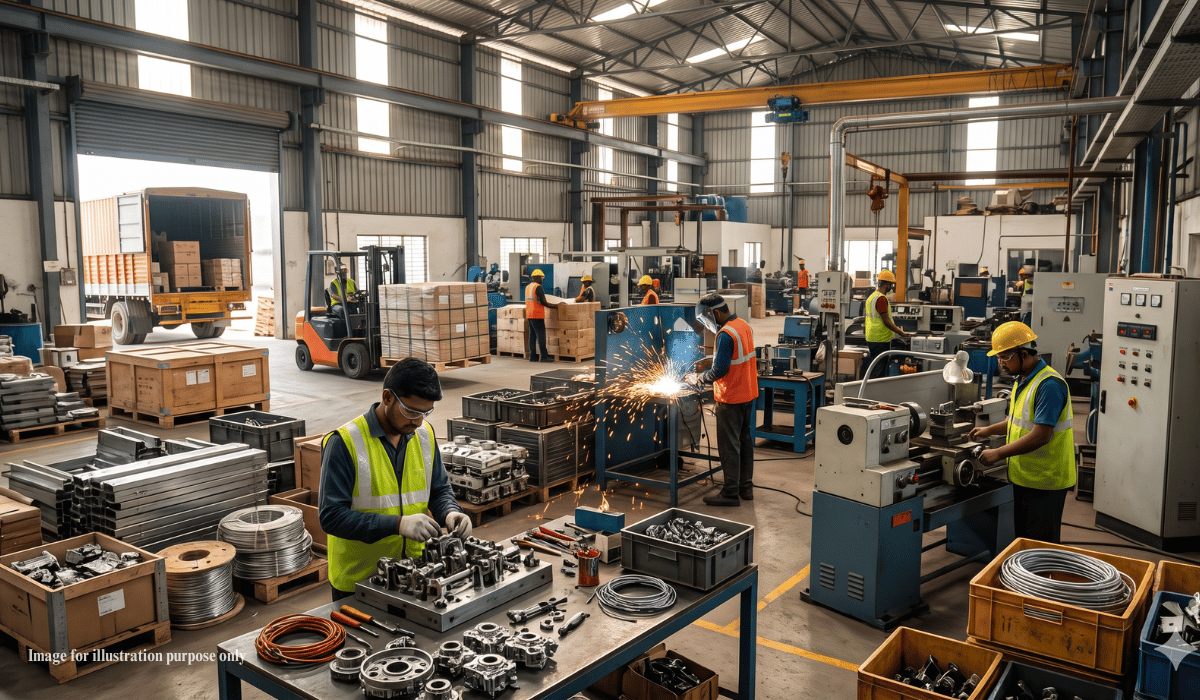
These sectors rely on networks of component suppliers and ancillary units, many of them SMEs in industrial clusters outside the metros. Growth in these segments is likely to translate into fuller order books for such units. This could further strengthen India’s industrial output through increased activity across regional manufacturing supply chains.
Under the use-based classification, intermediate goods grew 12.2%, the fastest among all categories and the largest contributor to overall growth. Primary goods rose 4.0% and capital goods 10.4%, with the capital goods index at 153.4. Infrastructure and construction goods grew 7.2% and consumer durables 6.0%.
The data points to demand for inputs and machinery, a sign of continued investment by manufacturers and their suppliers. September’s growth was 6.7%, against 8.0% (quick estimate) in August.

Biltrax Construction Data is tracking 65,000+ projects on their technology platform for their clients.
Get exclusive access to upcoming projects in India with actionable insights. Furthermore, gain a competitive advantage for your products in the Indian Construction Market.
Visit www.biltrax.com or email us at contact@biltrax.com to become a subscriber and generate leads.
Disclaimer: The information herein is based upon information obtained in good faith from sources believed to be reliable. All such information and opinions can be subject to change. Furthermore, The image featured in this article is for representation purposes only. It does not in any way represent the project. If you wish to remove or edit the article, please email editor@biltrax.com.
 0
Discover more from Biltrax Media, A Biltrax Group venture
Subscribe to get the latest posts sent to your email.