

Different climate, construction and performance requirements across Asian markets are creating an opportunity for Indian manufacturers to move beyond product exports towards higher-value, specification-led growth.
India’s paints, coatings, waterproofing and wider building-materials industry is increasingly looking towards Asia for its next phase of international growth. However, the opportunity is becoming less about how much India can manufacture and export, and more about whether Indian materials meet the technical and performance requirements that influence project specifications in individual markets.
For building materials, market access and market acceptance are two different propositions. A distributor can provide commercial reach, but sustained adoption often depends on decisions made much earlier, when architects, consultants and developers assess performance, durability, compliance, lifecycle value and suitability for local construction conditions. This distinction becomes particularly important across Asia, where neighbouring markets can present fundamentally different requirements. Humidity, rainfall, heat, substrate behaviour, maintenance practices, building regulations and infrastructure priorities vary considerably across the region. Therefore, a standard export proposition is unlikely to deliver the same results across every market.
The issue gained relevance at the 23rd ARCASIA Forum 2026 in Jaipur, held under the theme “Bringing Back… Vernacular Wisdom”. The forum brought together over 3,000 architects from 24 Asian countries to discuss local climate, natural materials, construction techniques, culture and urban design. For material manufacturers, such professional platforms also provide an opportunity to understand how architects in different markets evaluate products and technologies before incorporating them into project specifications.
Indian Building Materials: From Exports to Specification-Led Growth
Nepal demonstrates how climate resilience can influence this decision-making process. Recent floods and landslides across Rasuwa, Nuwakot and Dhading caused extensive damage to communities and critical infrastructure. Furthermore, reinforcing the need for construction systems that can withstand increasingly difficult climatic conditions. In such markets, building-material companies must demonstrate durability and technical relevance to the local environment rather than rely primarily on product availability or price.
In building materials, export opportunity begins at the architect’s specification table, not at the border. Nepal has a strong vernacular and heritage tradition, but there is a clear need for greater exposure to contemporary materials and building-performance technologies that can respond to climate, durability and changing development needs. India already exported about 7.45 US$-Billion worth of goods to Nepal in FY 2025-26, and Indian paints and coatings are already finding a market here. The next opportunity is to move beyond product supply towards technically credible, performance-led solutions that architects can confidently specify. Platforms such as ARCASIA are important because they allow architects, academics, policymakers and practitioners to evaluate these innovations first-hand and convert regional exchange into practical adoption.
-Ar. Iswar Lal Joshi, President, Society of Nepalese Architects (SONA)
Bangladesh presents a different but equally relevant market dynamic. Rapid urbanization is converging with climate-driven population movement, increasing pressure on cities, housing and urban infrastructure. According to the World Bank, about 38% of Bangladesh’s population lived in urban areas in 2021, with that share projected to reach 60% by 2050. The institution has specifically highlighted the need to strengthen climate-resilient secondary cities so that they can absorb future population movement and reduce pressure on Dhaka.
Climate migration adds another dimension. Under the World Bank’s pessimistic reference scenario, Bangladesh could see 13.3 Million internal climate migrants by 2050, driven by factors including water scarcity, agricultural stress and rising sea levels. Additionally, it creates a growing requirement for urban development combining scale and affordability with resilience to heat, humidity, rainfall and moisture. For Indian building materials manufacturers, Bangladesh represents an opportunity where technical performance must go hand in hand with commercial scalability. As secondary cities develop, housing and infrastructure requirements increase; therefore, products that address demanding climatic conditions available in viable price points could be more relevant.
Singapore: A Higher Benchmark for Building Material Performance
Singapore presents a contrasting market environment. Here, the challenge is not creating awareness around building performance but meeting an already sophisticated benchmark. Lifecycle performance, maintainability, environmental impact, certification and regulatory compliance carry greater weight in material evaluation. This further raises the threshold for companies seeking to participate in the market.
Ar. Yew Kee Cheong, Founding Principal, 2B ARCHITECTS in Singapore and Immediate Past President of AIA International, said,
For architects, the next generation of building materials cannot be evaluated only by appearance or initial cost. Performance over the building lifecycle, maintainability, carbon impact and resilience to a changing climate are becoming equally important considerations. Singapore alone is expected to see 47–53 US$-Billion in construction demand in 2026, creating a substantial market for materials that can demonstrate measurable performance. India already has the manufacturing scale and technical capability to participate more deeply in this opportunity. The export potential for Indian paints, coatings and building-performance solutions will depend on moving from a price-led proposition to one built around tested performance, certification, sustainability and suitability for tropical Asian conditions.
How Asian Markets Are Shaping Building Material Requirements
For paints and coatings, this evolution is particularly significant. The category has traditionally competed strongly on colour, finish and price. However, professional specification increasingly considers how coatings respond to heat, UV exposure, rainfall, moisture, pollution and substrate behaviour over time. Manufacturers must therefore strengthen their technical proposition with credible testing, application systems and documentation.
Sri Lanka brings another set of considerations. Geographic proximity and an established commercial relationship with India can support market access. Meanwhile, long-term adoption still depends on whether products demonstrate reliability under local climatic and construction conditions.
India’s opportunity in Asian construction markets will not be defined by price alone. It will depend on the ability of Indian manufacturers to demonstrate performance, reliability and solutions that respond to the realities of different built environments. The scale of India’s material and technology ecosystem gives it a strong base to serve neighboring markets, and Sri Lanka is a natural part of that opportunity. With India’s exports to Sri Lanka reaching 5.52 US$-Billion in FY 2025-26, the commercial relationship already has significant depth. The next opportunity is to translate that strength into greater cross-border adoption of high-performance building materials, technologies and design-led solutions.
-Ar. Russell Dandeniya, Director, RDC Architects (Pvt) Ltd, Sri Lanka
For manufacturers, the opportunity lies in converting geographical and commercial proximity into stronger technical acceptance. This requires engagement beyond distribution channels, particularly with architects, consultants, applicators and other stakeholders who influence specification and execution.
Smaller markets can require a different route altogether. In Brunei, for example, professional and institutional engagement can play an important role in building awareness of new materials and technologies before wider commercial adoption. The High Commission of India in Brunei also lists building materials among the product categories with import potential from India.
The next phase of Asia’s built environment will depend increasingly on how effectively knowledge, materials and technologies move across borders. The quality and sophistication of the architectural technologies and building solutions showcased in India reflect capabilities that can find relevance well beyond the domestic market. With India-Brunei bilateral trade at 365 US$-Million in 2025-26, and building materials specifically identified as an area of import potential from India, there is clear scope to deepen this exchange. Platforms such as ARCASIA can play an important role in moving the conversation from professional engagement to sustained regional collaboration, enabling architects to evaluate credible innovations while opening new markets for building-material and technology companies across Asia.
-Ar. Zul ‘Amali bin Dato, Paduka Haji Idris
Taken together, these markets illustrate why Indian building materials manufacturers cannot rely on a uniform export strategy for regional growth. Nepal places greater emphasis on climate resilience and exposure to contemporary material technologies. Bangladesh combines rapid urban expansion with climate migration and a requirement for scalable, resilient solutions. Singapore sets a considerably higher benchmark for lifecycle performance, certification and sustainability. Sri Lanka offers commercial familiarity but still requires local performance credibility. Brunei demonstrates how professional networks and technical engagement can help open smaller but relevant markets.
Building Technical Credibility for Long-Term Growth
For Indian manufacturers, the competitive advantage will increasingly lie in adapting a strong manufacturing base to individual market requirements. Additionally, this calls for investment in production and distribution. It also includes testing, certification, application systems, technical documentation and market-specific support.
For Zydex Paints & Waterproofing, which participated in ARCASIA Forum 2026, this shift has direct relevance to how Indian coatings companies can build a stronger presence across the region. It does not treat Asia as a single export opportunity. The company sees specification confidence in individual markets as a more sustainable route to growth.
The export conversation for Indian coatings has to move from quantity shipped to performance specified. Moreover, Asian markets are not uniform, and an architect in Singapore, Nepal, Sri Lanka or Brunei is evaluating a different combination of humidity, heat, rainfall, substrate behavior, maintenance and compliance. That means manufacturers need to export a complete performance proposition, supported by testing, certification, application systems and local technical capability. India has the manufacturing depth to do this; the next step is to earn specification confidence market by market.
-Mr Amrendra Mishra, Chief Operating Officer, Zydex Paints & Waterproofing
That shift also changes the economics of regional expansion. Competing primarily on price keeps a manufacturer closer to a product-supply relationship. Meanwhile, securing professional acceptance creates opportunities to participate earlier in project decisions and support repeat specifications. Additionally, it will build longer-term relationships across the construction value chain.
India’s Building Materials Sector: From Manufacturing Strength to Regional Growth
India already has manufacturing depth and a sizeable building-materials ecosystem. The next opportunity is to translate that capability into solutions that address the specific requirements of different Asian markets. For Indian paints, coatings, waterproofing and other building-performance companies, regional growth will depend on how much material they export. Furthermore, how effectively Indian technology earns technical credibility, specification acceptance and repeat adoption across diverse built environments.
Also Read:
Coromandel Court, Bengaluru | Temple Town
Beyond the Bar Cart: Why Bars, Coffee Corners and Drink Stations Are Becoming the New Luxury at Home
Is Indian luxury architecture Becoming Too Predictable

Biltrax Construction Data is tracking 65,000+ projects on their technology platform for their clients.
Get exclusive access to upcoming projects in India with actionable insights. Furthermore, gain a competitive advantage for your products in the Indian Construction Market.
Visit www.biltrax.com or email us at contact@biltrax.com to become a subscriber and generate leads.
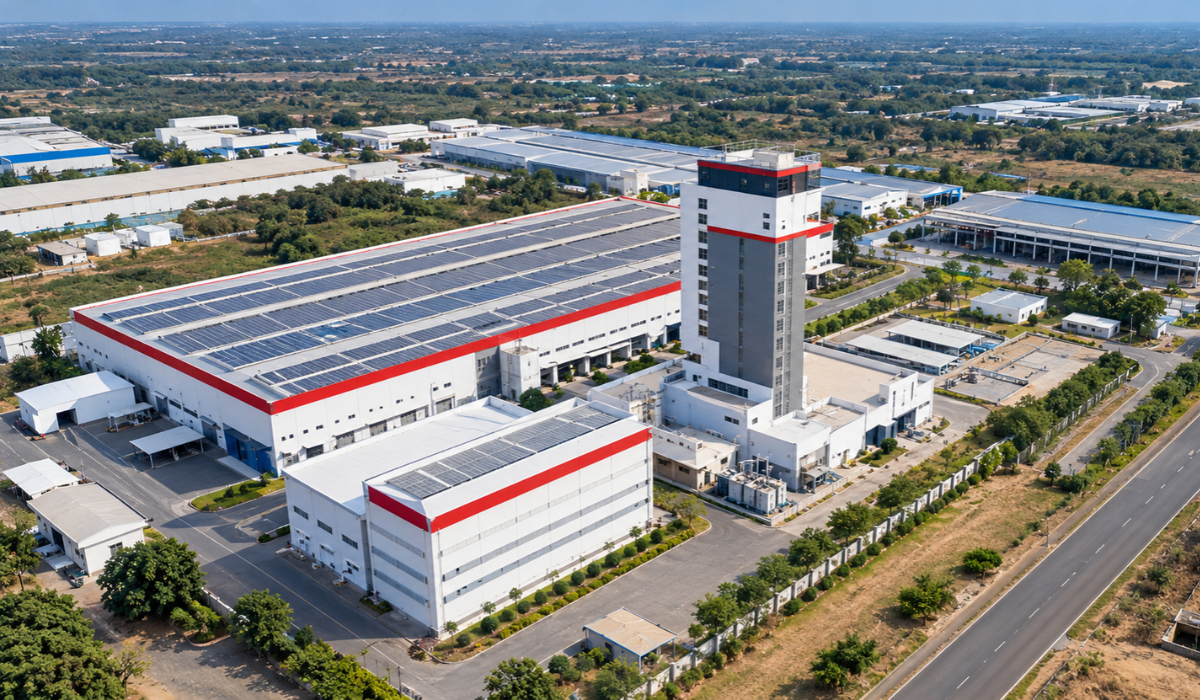
Disclaimer: The information herein is based upon information obtained in good faith from sources believed to be reliable. All such information and opinions can be subject to change. Furthermore, The image featured in this article is for representation purposes only. It does not in any way represent the project. If you wish to remove or edit the article, please email editor@biltrax.com.
 0
Discover more from Biltrax Media, A Biltrax Group venture
Subscribe to get the latest posts sent to your email.