

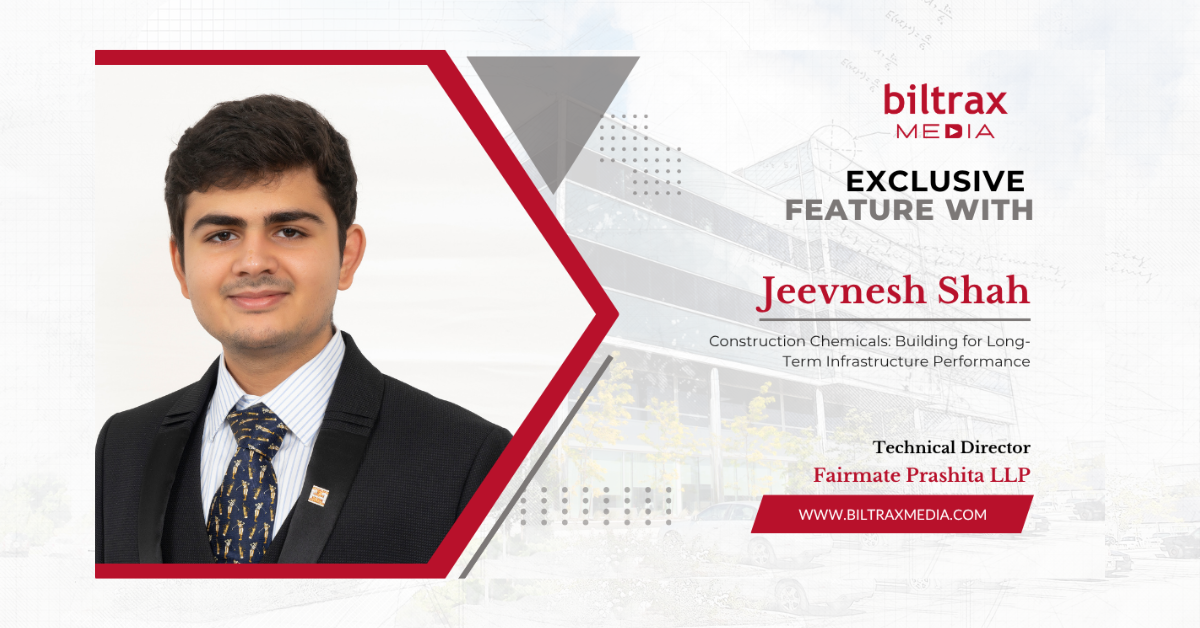
India is in the midst of one of the world’s largest infrastructure expansion programmes. From
expressways and airports to metros, high-speed rail corridors, industrial parks, and smart cities, the
scale and speed of development are unprecedented. However, the true measure of success is not just
how quickly we build, but how well these assets perform over the next 50 to 100 years.
In my view, maintaining execution speed while ensuring quality, sustainability, durability, and cost
efficiency depends on three critical factors: the adoption of advanced materials, proper planning
and execution, and a lifecycle approach to infrastructure development.
Traditionally, projects focused heavily on reducing initial construction costs and accelerating timelines.
Today, the industry has recognised that durability and lifecycle performance are equally important. A
highway or bridge that requires frequent repairs ultimately becomes far more expensive than one built
with superior materials and long-term performance in mind.
This is where construction chemicals and advanced material technologies have transformed the
industry.
Over the last decade, high-performance concrete admixtures have significantly improved project
execution. Modern superplasticizers and slump-retaining admixtures enable concrete to maintain
workability for extended periods, particularly important in large infrastructure projects where concrete
is transported over long distances or placed continuously.
The use of advanced admixture technologies has helped contractors achieve faster placement rates,
improved pumpability, and reduced rejection of concrete batches. In many projects, these technologies
have contributed to higher productivity, reduced rework, and substantial savings in labour and project
timelines.
Similarly, waterproofing and durability-enhancing technologies have become essential in extending the
life of infrastructure assets. Water ingress remains one of the leading causes of concrete deterioration.
Advanced crystalline waterproofing systems now create permanent protection within the concrete
matrix itself, significantly reducing leakage, corrosion, and long-term maintenance requirements.
Protective coatings and anti-carbonation systems are also playing a major role in enhancing asset
performance, especially in coastal and industrial environments where structures are exposed to
aggressive conditions. By protecting concrete from chloride attack, carbonation, and environmental
degradation, these technologies significantly increase service life and reduce lifecycle costs.
Another area witnessing remarkable progress is the development of thermal insulating and reflective
coatings. Such solutions not only waterproof structures but also reduce heat absorption, thereby
improving energy efficiency and contributing to sustainable construction practices.
India’s infrastructure ambitions continue to grow. I believe the next generation of construction
chemical solutions will be defined by four key trends.
First, sustainability will become a central driver of innovation. The industry will increasingly adopt
low-carbon and environmentally responsible formulations that minimize environmental impact while
maintaining high performance.
Second, durability will take center stage. Future solutions will focus on extending the life of
infrastructure assets and reducing maintenance interventions, thereby improving overall project
economics.
Third, smart material technologies will gain momentum. Advanced admixtures, self-healing
systems, and high-performance repair technologies will help engineers deliver structures. These are more
resilient and capable of withstanding increasingly demanding environmental conditions.
Finally, modern application practices and integrated construction systems will become
increasingly important. The future lies not only in developing better products but also in ensuring
their proper application through technical support, training, and digital monitoring technologies.
At Fairmate Prashita, we firmly believe that innovation must address real world challenges. For more than four decades, we have continuously developed solutions that improve
concrete performance, waterproofing, protection, and sustainability. Our focus remains on creating
technologies that help infrastructure assets perform better, last longer, and deliver greater value.
India moves towards vision of Viksit Bharat, the construction chemicals industry has a
tremendous opportunity and responsibility to support this transformation. The infrastructure of
tomorrow must be built faster, but more importantly, it must be built smarter, stronger, and more
sustainably.
The future belongs to technologies that combine speed with durability, performance with sustainability, and
innovation with long-term value creation. That is the philosophy that drives us at Fairmate, and that is the
future we are committed to building.
Also Read:
Summer Interior Design: Where Light Meets Serene Luxury
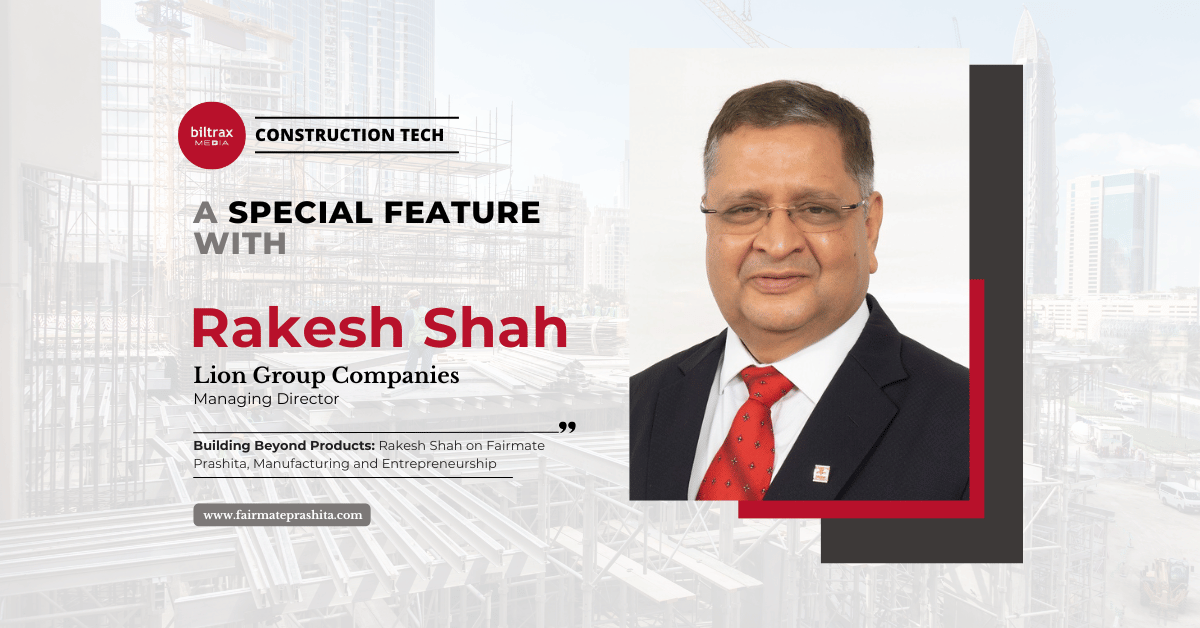
Building Beyond Products: Mr Rakesh Shah on Fairmate Prashita, Manufacturing and Entrepreneurship
From Glass Skins to Climate-Responsive Envelopes: The Evolution of Façade Design in 2025–26

Biltrax Construction Data is tracking 65,000+ projects on their technology platform for their clients.
Get exclusive access to upcoming projects in India with actionable insights. Furthermore, gain a competitive advantage for your products in the Indian Construction Market.
Visit www.biltrax.com or email us at contact@biltrax.com to become a subscriber and generate leads.
Disclaimer: The information herein is based upon information obtained in good faith from sources believed to be reliable. All such information and opinions can be subject to change. Furthermore, The image featured in this article is for representation purposes only. It does not in any way represent the project. If you wish to remove or edit the article, please email editor@biltrax.com.
 0
0Discover more from Biltrax Media, A Biltrax Group venture
Subscribe to get the latest posts sent to your email.