

India’s industrial and infrastructure landscape is undergoing rapid transformation, driven by manufacturing expansion, logistics growth, e-commerce, renewable energy, and large-scale public infrastructure investments. As developers and industries seek faster project delivery, cost efficiency, and sustainable construction practices, traditional building methods are increasingly being complemented by modern construction systems.
Among these, Pre-Engineered Buildings (PEBs) have emerged as a preferred solution for industrial and commercial developments. By shifting much of the fabrication process off-site and assembling structural components at the project location, PEBs significantly reduce construction timelines while maintaining structural reliability and design flexibility.
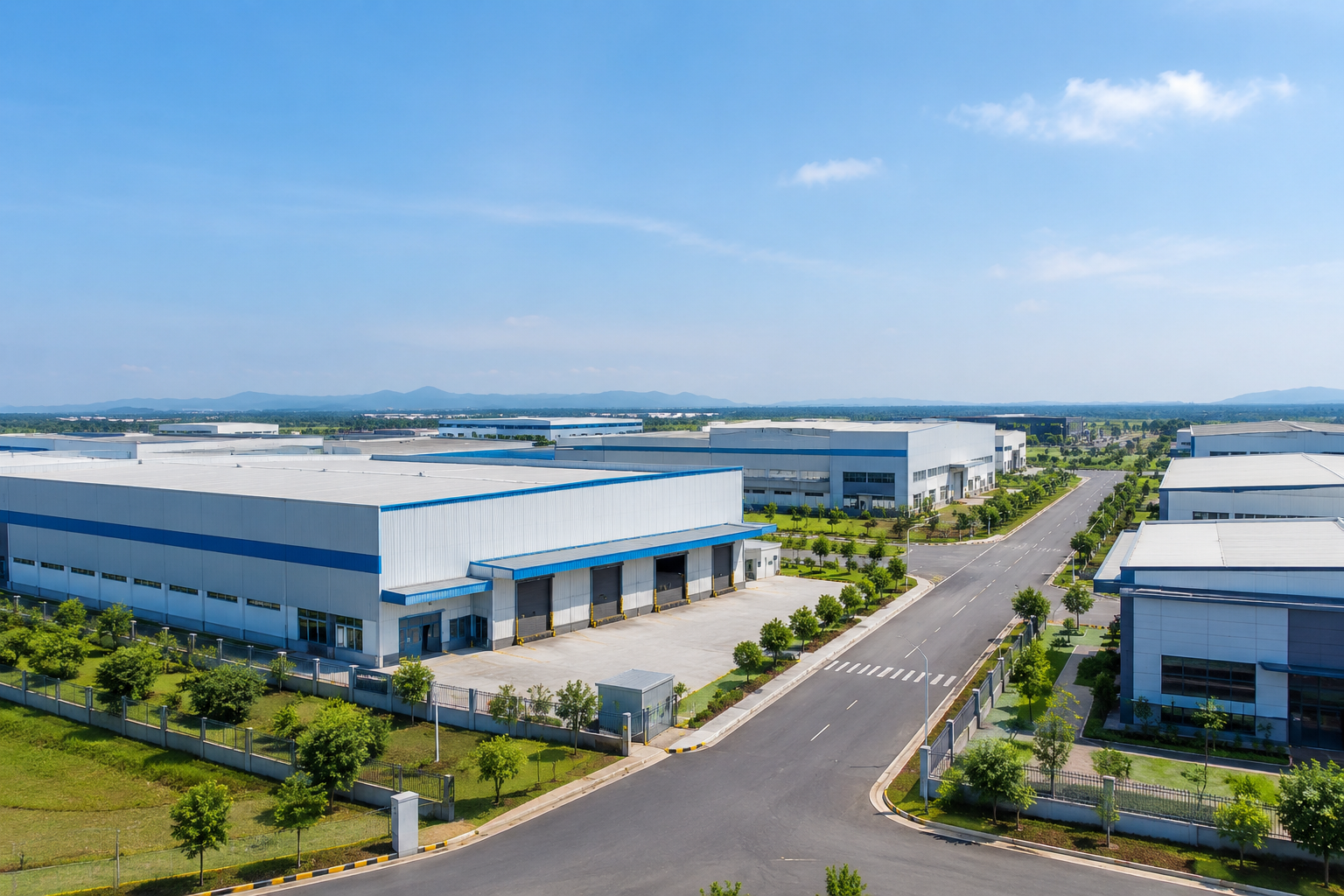
Today, PEBs are widely used across warehouses, manufacturing facilities, logistics parks, airports, metro depots, commercial buildings, sports complexes, and increasingly, utility infrastructure. As India’s industrial ecosystem continues to evolve, PEBs are playing a pivotal role in enabling faster and more efficient project execution.
What Are Pre-Engineered Buildings?
Manufacturers design, engineer, and fabricate Pre-Engineered Buildings (PEBs) as steel structures in controlled manufacturing facilities before transporting them to the construction site for assembly. Unlike conventional construction, where contractors carry out most structural work on-site, PEBs use precision-engineered prefabricated components to minimise construction time and material wastage.
A typical PEB system consists of:
- Primary steel frames
- Secondary structural members such as purlins and girts
- Roof and wall cladding systems
- Bracing systems for structural stability
- Mezzanine floors and accessories, where required
- Fasteners and connection systems
Since every component is manufactured according to project specifications, the system offers greater dimensional accuracy and consistent quality throughout the structure.

How Are PEBs Constructed?
The construction process for a Pre-Engineered Building differs significantly from conventional reinforced concrete structures.
The process begins with structural design and engineering based on project requirements, including building dimensions, load conditions, wind speeds, and intended use. Once engineers finalise the design, manufacturers fabricate the steel components in a factory using automated machinery, ensuring precision and quality control.
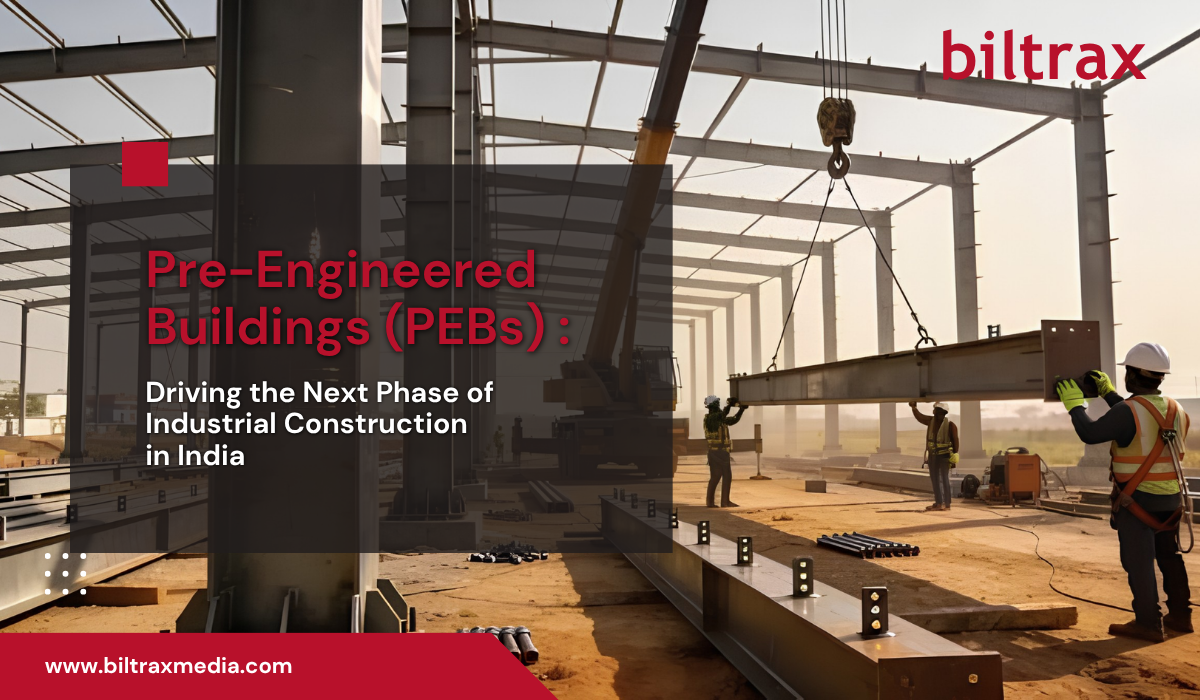
While manufacturers fabricate the structural components, construction teams simultaneously complete the foundation work at the project site. After manufacturing the steel components, they transport them to the site, where workers assemble them using bolted connections instead of extensive on-site fabrication or welding. Once the structural framework is complete, workers install the roofing, wall cladding, insulation, doors, windows, and MEP services.
By executing fabrication and site preparation in parallel, PEB construction substantially reduces overall project timelines compared to conventional construction methods.
Why PEBs Are Gaining Momentum in India
The growing adoption of Pre-Engineered Buildings is closely linked to the changing requirements of India’s industrial and infrastructure sectors.
Faster Project Delivery
Time has become one of the most critical factors in industrial construction. Since structural components are fabricated off-site while foundation work progresses simultaneously, PEBs can significantly reduce project schedules. Faster completion allows industries to commence operations earlier and improve project economics.
Optimised Material Utilisation
PEBs are engineered using advanced structural design software that optimises steel consumption based on actual load requirements. This reduces unnecessary material usage and minimises wastage during construction.
Design Flexibility
Modern PEB systems support large column-free spans, allowing greater flexibility for warehouses, manufacturing units, aircraft hangars, exhibition centers, and logistics facilities. The modular nature of these buildings also makes future expansion relatively straightforward.
Quality and Precision
Factory-controlled fabrication enables consistent quality, precise dimensions, and greater structural reliability than conventional site-based fabrication.
Sustainable Construction
Steel used in PEB systems is highly recyclable, while precision manufacturing reduces construction waste. Shorter construction periods also minimise on-site resource consumption, making PEBs increasingly compatible with sustainable construction practices.
Applications of PEBs Across Industries
The versatility of Pre-Engineered Buildings has led to their adoption across multiple sectors.
Warehousing and Logistics
The rapid growth of e-commerce, organised retail, and third-party logistics has significantly increased demand for large-span warehouses and distribution centers. PEBs enable quicker construction of logistics facilities while accommodating flexible storage layouts.
Manufacturing Facilities
Automobile, engineering, electronics, pharmaceutical, food processing, and textile industries increasingly utilise PEBs for production plants, assembly units, and storage facilities due to their scalability and efficient construction timelines.
Data Centers
India’s expanding digital economy has accelerated investments in Data Centers. While specialised mechanical and electrical systems remain critical, PEBs are increasingly being considered for supporting structures and utility buildings associated with data center campuses.
Airports and Aviation Infrastructure
PEBs are commonly used for aircraft hangars, cargo terminals, maintenance facilities, and airport support buildings where large unobstructed spans are essential.
Commercial and Institutional Buildings
Showrooms, office buildings, educational facilities, exhibition halls, sports arenas, and convention centers are also adopting PEB systems for faster project delivery and greater architectural flexibility.
Agricultural Infrastructure
Cold storage facilities, food processing units, equipment shelters, and agricultural warehouses represent another growing application area for PEB construction.

PEBs vs Conventional Construction
| Parameter | Pre-Engineered Buildings (PEBs) | Conventional Construction |
| Construction Timeline | Faster due to off-site fabrication | Longer due to sequential construction |
| Material Wastage | Minimal | Comparatively higher |
| Structural Weight | Lightweight steel systems | Heavier structural systems |
| Quality Control | Factory-controlled manufacturing | Site-dependent quality |
| Future Expansion | Easier to modify or expand | More complex and time-consuming |
| Labour Requirement | Lower on-site workforce | Higher on-site labour dependency |
| Sustainability | Reduced waste and recyclable materials | Greater material consumption |
Beyond PEBs: The Growing Role of Prefabricated Utility Structures
The adoption of prefabrication extends beyond industrial buildings. Developers and infrastructure agencies are increasingly deploying modular utility structures to reduce construction time and improve project efficiency.
Prefabricated solutions are now widely used for:
- Site offices
- Security cabins
- Worker accommodation
- Electrical substations
- Pump houses
- Portable classrooms
- Healthcare facilities
- Public utility buildings
- Modular washrooms
- Control rooms
These structures reduce on-site work because manufacturers produce and install them using prefabricated construction methods, making them particularly useful for infrastructure projects, industrial facilities, renewable energy developments, and remote project locations.
As off-site construction technologies mature, prefabricated utility buildings are becoming an integral part of modern project delivery.
Key Drivers Accelerating PEB Adoption
Several macroeconomic and policy developments continue to support growth in India’s PEB industry.
Government initiatives such as Make in India, PM Gati Shakti, the National Logistics Policy, and industrial corridor development programmes are generating sustained demand for manufacturing facilities and logistics infrastructure.
Simultaneously, the rapid expansion of warehousing, Data Centers, renewable energy projects, food processing, and export-oriented manufacturing has increased the need for construction systems that enable faster project execution.
Growing emphasis on sustainable construction practices, resource efficiency, and lifecycle performance is also encouraging developers to adopt prefabricated and steel-intensive construction solutions.
Challenges in Wider Adoption
Despite increasing acceptance, PEB construction continues to face certain challenges.
Transportation of large fabricated components may become difficult for projects located in remote regions with limited road connectivity. Successful implementation also requires early-stage planning, precise engineering coordination, and skilled erection teams.
Additionally, some projects continue to favour conventional reinforced concrete construction due to familiarity, regional practices, or specific architectural requirements. However, increasing awareness and improvements in manufacturing capabilities are gradually addressing these challenges.
Future Outlook
India’s construction industry is steadily moving towards greater industrialisation, digitalisation, and off-site manufacturing. Technologies such as Building Information Modelling (BIM), automated fabrication, digital engineering, and advanced structural analysis are further improving the efficiency of Pre-Engineered Buildings.
As industries continue to prioritise speed, sustainability, and lifecycle value, industries will increasingly integrate PEBs into industrial and infrastructure developments across the country.
Conclusion
The growing adoption of Pre-Engineered Buildings reflects a broader shift in how developers and industries plan and deliver industrial infrastructure in India. Faster construction timelines, efficient material utilisation, design flexibility, and improved quality control have positioned PEBs as a practical solution for warehouses, manufacturing plants, logistics parks, airports, and commercial developments.
For developers, contractors, architects, structural consultants, and building material manufacturers, this transition presents new opportunities across the construction value chain. Moreover, as industrial investments continue to accelerate and demand for modern infrastructure grows, industries will increasingly use PEBs and prefabricated utility structures to build India’s next generation of industrial and logistics developments.
Also Read:
Chhattisgarh Attracts 8 Lakh INR-Crore Investment Proposals, Strengthening Its Industrial Growth Story
7 Innovative Building Materials That Are Changing Modern Construction
Cement Varieties Explained: OPC, PPC, Composite Cement, and Where They Fit

Biltrax Construction Data is tracking 65,000+ projects on their technology platform for their clients.
Get exclusive access to upcoming projects in India with actionable insights. Gain a further competitive advantage for your products in the Indian Construction Market.
Visit www.biltrax.com or email us at contact@biltrax.com to become a subscriber and generate leads.
Disclaimer: The information herein is based upon information obtained in good faith from sources believed to be reliable. All such information and opinions can be subject to change. Furthermore, the image featured in this article is for representation purposes only. It does not in any way represent the project. If you wish to remove or edit the article, please email editor@biltrax.com.
 0
0Discover more from Biltrax Media, A Biltrax Group venture
Subscribe to get the latest posts sent to your email.