

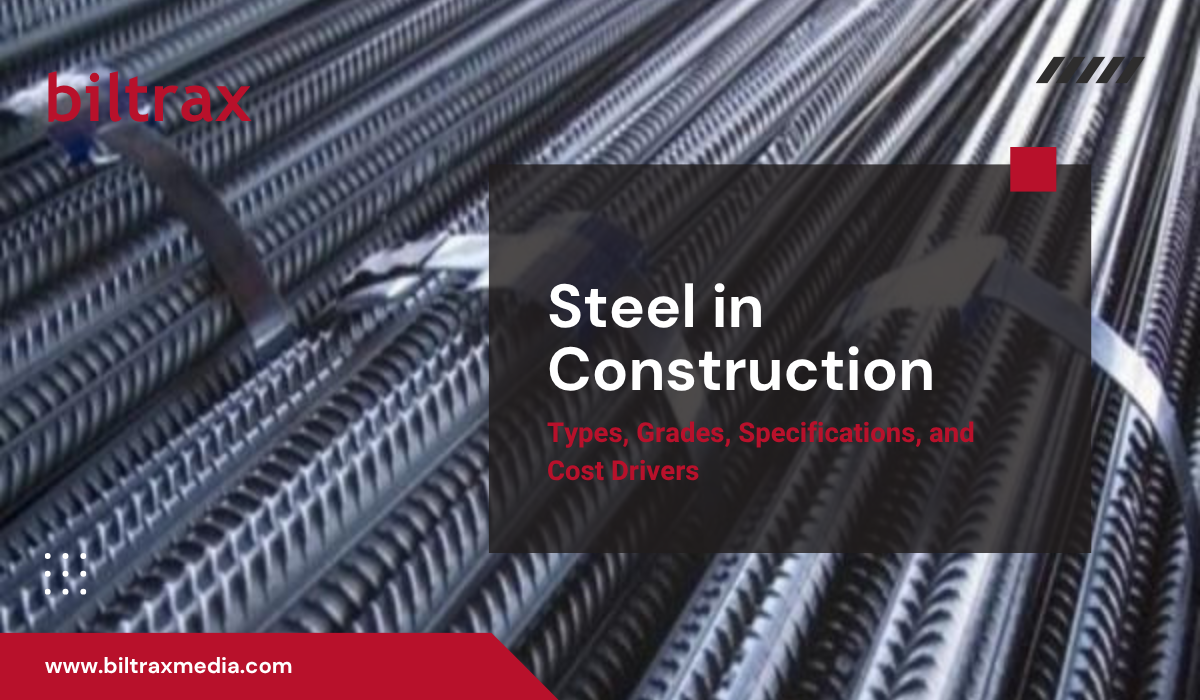
Steel forms the backbone of modern construction. From high-rise commercial towers and industrial warehouses to metro infrastructure and residential developments, steel enables structures to achieve greater strength, durability, speed, and design flexibility.
As India’s construction sector continues to expand across infrastructure, manufacturing, logistics, and urban development, the demand for high-performance steel products has increased significantly. Developers and contractors today are evaluating steel based on strength, they’re also considering factors such as corrosion resistance, weldability, seismic performance, lifecycle cost, and sustainability.
However, steel selection in construction is becoming increasingly complex. The market now includes multiple steel categories, grades, standards, and specifications designed for different applications. Simultaneously, fluctuating raw material prices, global supply chains, and infrastructure demand continue to influence steel costs across the construction ecosystem. This article explores the major types of steel used in construction, commonly used grades and specifications in India, key applications, and the primary factors influencing steel prices in the market.
The Role of Steel in Modern Construction
Steel is an alloy primarily composed of iron and carbon. Depending on the addition of alloying elements such as chromium, nickel, manganese, or molybdenum, steel can achieve varying levels of strength, corrosion resistance, hardness, and ductility.
In construction, steel plays a critical role in:
- Structural frameworks
- Reinforcement systems
- Roofing and cladding
- Industrial structures
- Bridges and flyovers
- Warehouses and factories
- High-rise developments
- Infrastructure projects
Its high strength-to-weight ratio allows engineers to create lighter yet stronger structures capable of handling substantial loads and environmental stresses.
Why Steel is Preferred in Construction
Steel continues to dominate large-scale construction projects due to several structural and operational advantages.
1. High Strength and Durability
Steel offers excellent load-bearing capacity and long-term structural stability. It performs effectively under tension and compression, making it ideal for reinforced concrete systems and structural frameworks.
2. Faster Construction
Prefabricated steel components enable quicker installation and reduce project timelines significantly. This has become increasingly important for industrial parks, logistics facilities, and commercial developments.
3. Design Flexibility
Steel can be fabricated into multiple shapes and sections, enabling architects and engineers to design large-span structures, complex facades, and high-rise buildings efficiently.
4. Seismic and Structural Performance
Steel structures generally exhibit better flexibility and ductility under seismic loads compared to conventional masonry systems.
5. Sustainability
Steel is 100% recyclable without significant loss in quality, making it one of the most sustainable construction materials globally.
Major Types of Steel Used in Construction
1. Carbon Steel
The Most Widely Used Construction Steel
Carbon steel accounts for the majority of steel used in construction projects globally. It primarily consists of iron and carbon, with varying carbon content influencing strength and ductility.


Types of Carbon Steel
- Low-carbon steel
- Medium-carbon steel
- High-carbon steel
Applications
Carbon steel is widely used in:
- Reinforcement bars (TMT bars)
- Structural sections
- Beams and columns
- Industrial fabrication
- Residential construction
Advantages
- Cost-effective
- Strong and durable
- Easy to fabricate
- Suitable for large-scale structural work
Limitations
- Susceptible to corrosion without protective treatment
2. Structural Steel
The Backbone of Modern Infrastructure
Structural steel refers to steel sections specifically manufactured for load-bearing applications in buildings and infrastructure.
Common structural steel sections include:
- I-beams
- H-beams
- Channels
- Angles
- Hollow sections
Structural sections form the primary framework of high-rise buildings, bridges, warehouses, and industrial facilities.


Applications
- Commercial towers
- Airports
- Industrial sheds
- Metro infrastructure
- Warehousing facilities
- Long-span structures
Key Benefits
Flexible future expansion
High load-bearing capacity
Faster erection
Reduced foundation loads
3. Reinforcement Steel (TMT Bars)
Essential for Reinforced Concrete Construction
TMT (Thermo-Mechanically Treated) bars are among the most critical steel products used in Indian construction.
Concrete performs well under compression but poorly under tension. Reinforcement steel compensates for this limitation by improving tensile strength and crack resistance.


Common TMT Grades in India
- Fe 415
- Fe 500
- Fe 550
- Fe 600
The number represents yield strength measured in MPa.
Applications
- Foundations
- Columns
- Beams
- Slabs
- Bridges
- Infrastructure projects
Key Selection Parameters
While selecting TMT bars, engineers often evaluate:
- Yield strength
- Ductility
- Weldability
- Corrosion resistance
- ISI certification
4. Stainless Steel
Corrosion-Resistant Steel for Specialized Applications
Stainless steel contains a minimum chromium content that improves corrosion resistance. Common grades include 304 and 316 stainless steel.


Applications
- Architectural facades
- Railings
- Airports
- Food processing facilities
- Healthcare infrastructure
- Coastal construction
Advantages
- Excellent corrosion resistance
- Premium finish
- Long lifespan
- Low maintenance
Limitations
- Higher cost compared to carbon steel
5. Alloy Steel
Enhanced Performance Through Alloying Elements
Alloy steel is produced by adding elements such as chromium, nickel, manganese, vanadium, and molybdenum to improve mechanical properties.


Applications
- Heavy industrial projects
- Power plants
- Oil and gas infrastructure
- Specialized engineering applications
Advantages
- Improved toughness
- Better wear resistance
- Enhanced heat and corrosion resistance
Steel Grades Commonly Used in Construction
Steel grades define the mechanical and chemical properties of steel products.
Structural Steel Grades
Common structural steel grades include:
| Grade | Typical Application |
| ASTM A36 | Structural beams and columns |
| ASTM A572 | High-strength structural applications |
| IS 2062 | Indian standard structural steel |
| ASTM A992 | High-rise structural frameworks |
Reinforcement Steel Grades
| Grade | Characteristics |
| Fe 415 | Good ductility for residential structures |
| Fe 500 | Widely used in modern construction |
| Fe 550 | Higher strength applications |
| Fe 600 | Heavy infrastructure and industrial projects |
Higher grades provide increased strength but may offer lower ductility depending on project requirements.
Stainless Steel Grades
| Grade | Application |
| SS 304 | General architectural and interior use |
| SS 316 | Coastal and corrosive environments |
| SS 430 | Decorative applications |
Steel Specifications and Standards in India
Steel products used in construction must comply with national and international standards to ensure structural safety and consistency.
Key Indian Standards
| Standard | Purpose |
| IS 1786 | High-strength deformed steel bars |
| IS 2062 | Structural steel specification |
| IS 432 | Mild steel reinforcement |
| IS 800 | Structural steel design code |
ISI certification remains one of the primary quality indicators for steel products used in Indian construction.
Applications of Steel Across Construction Segments
| Construction Segment | Major Steel Applications | Why Steel is Preferred |
| Residential Construction | RCC reinforcement, roofing systems, gates, railings, structural framing | Offers structural strength, seismic resistance, and long-term durability for residential buildings |
| Commercial Construction | Structural frameworks, long-span roofs, facade systems, HVAC supports | Enables flexible layouts, faster construction, and large-span architectural designs |
| Industrial Construction | Warehouses, industrial sheds, heavy-duty structural systems | Supports large-span requirements, rapid project execution, and heavy load-bearing performance |
| Infrastructure Projects | Bridges, metro rail systems, airports, flyovers, transmission towers | Provides high strength, durability, and performance under large-scale infrastructure demands |
Key Cost Drivers Affecting Steel Prices
Steel pricing in India is highly dynamic and influenced by multiple domestic and global factors.
1. Raw Material Prices
Steel manufacturing heavily depends on raw materials such as iron ore, coking coal, scrap metal, and ferro alloys. Fluctuations in the prices of these materials directly impact steel production costs. For instance, rising iron ore or coal prices increase manufacturing expenses for steel producers, which eventually reflects in market steel prices. Since India also imports a portion of its raw material requirements, global commodity price movements further influence domestic steel costs.
2. Global Demand and Supply
Steel prices are closely linked to international demand and supply conditions. Large-scale infrastructure investments, industrial growth, and construction activity across major economies often increase global steel consumption. When demand rises sharply or supply becomes constrained due to geopolitical issues, export restrictions, or production slowdowns, steel prices tend to increase across markets, including India.
3. Energy Costs
Steel production is highly energy-intensive, especially during processes such as smelting, rolling, and refining. Rising electricity tariffs, fuel costs, and natural gas prices significantly increase operational expenses for steel manufacturers. As production costs rise, steel suppliers generally pass on a portion of the increased expenses to end users in the construction sector.
4. Logistics and Transportation
Transportation plays a major role in steel pricing due to the bulk nature of steel products. Freight charges, railway transportation costs, fuel prices, and port handling expenses directly affect the final delivered cost of steel. Regional pricing variations across India are often influenced by proximity to steel plants, transportation infrastructure, and logistics efficiency.
5. Government Policies and Duties
Import duties, export regulations, environmental policies, and taxation significantly influence steel market dynamics. Government infrastructure spending can also increase steel demand rapidly. Additionally, stricter environmental compliance requirements may increase manufacturing costs for steel producers, further impacting market prices.
6. Construction Market Activity
Steel demand generally rises during periods of strong real estate growth and infrastructure expansion. Large-scale investments in roads, railways, airports, industrial corridors, renewable energy, and urban development projects increase overall steel consumption. Higher demand often places upward pressure on steel prices, particularly during peak construction cycles.
Challenges Associated with Steel in Construction
Despite its advantages, steel also presents certain challenges.
Corrosion Risk
Steel exposed to moisture can corrode over time without proper protective coatings or maintenance.
Price Volatility
Steel prices fluctuate frequently due to global market conditions and raw material availability.
Thermal Conductivity
Steel transfers heat rapidly, requiring additional insulation measures in certain climatic conditions.
Skilled Fabrication Requirements
Structural steel projects require skilled fabrication, welding, and erection expertise to maintain quality and safety.
The Future of Steel in India’s Construction Sector
India’s steel consumption is expected to witness sustained growth over the coming years, driven by rapid urbanisation, infrastructure expansion, industrial development, and increasing investments in logistics and manufacturing. The continued development of metro rail networks, renewable energy parks, data centres, industrial corridors, and warehousing facilities is likely to further strengthen steel demand across sectors.
At the same time, the construction industry is gradually shifting toward high-performance and sustainable steel solutions. Developers and contractors are increasingly adopting high-strength steel products that reduce structural weight while improving efficiency and durability. Prefabricated and pre-engineered steel systems are also gaining traction due to their ability to reduce construction timelines and labour dependency.
Sustainability is expected to play a major role in the future of the steel industry. Manufacturers are increasingly investing in green steel technologies, recycled steel production, and low-emission manufacturing processes to align with global environmental goals and India’s long-term decarbonisation targets.
Additionally, advancements in fabrication technologies, automation, and digital construction practices are likely to improve project execution speed, precision, and cost efficiency. As India continues to modernise its built environment, steel will remain central to the development of resilient, scalable, and future-ready infrastructure.
Conclusion
Steel remains one of the most critical materials shaping modern construction globally and in India. From reinforcement systems and structural frameworks to industrial infrastructure and architectural applications, steel enables the construction of safer, faster, and more durable structures.
However, selecting the right type and grade of steel requires careful evaluation of project requirements, environmental conditions, structural loads, and lifecycle costs.
As India’s built environment continues to evolve, steel will remain central to the country’s infrastructure and urban development story — balancing strength, speed, sustainability, and engineering innovation for the next generation of construction projects.
Also Read:
Delhi-NCR Decongestion Push: Work on Key Road Infrastructure Projects to Start by 2027
Union Budget 2026-27: Impact on India’s Construction Sector
Types of Bricks and Their Applications in India

Biltrax Construction Data is tracking 38,000+ projects on their technology platform for their clients.
Get exclusive access to upcoming projects in India with actionable insights. Gain a further competitive advantage for your products in the Indian Construction Market.
Visit www.biltrax.com or email us at contact@biltrax.com to become a subscriber and generate leads.
Disclaimer: The information herein is based upon information obtained in good faith from sources believed to be reliable. All such information and opinions can be subject to change. Furthermore, the image featured in this article is for representation purposes only. It does not in any way represent the project. If you wish to remove or edit the article, please email editor@biltrax.com.
 0
0Discover more from Biltrax Media, A Biltrax Group venture
Subscribe to get the latest posts sent to your email.